Pages

Thursday, May 28, 2015

Klassische Musik Hamburg

Die Freie und Hansestadt Hamburg ist schon interessant, weil es eine freie Stadt ist und da gibt viele zu tun und sehen. Aber ich finde die Musikszene in Hamburg besonders interessant. Heute schreibe ich nur über die Klassische Musik, aber es gibt viele andere Musik Genres, die in Hamburg gefunden werden können.

Hamburg hat drei Kulturorchester - das NDR (Norddeutsche Rundfunk) Sinfonieorchester Hamburg, die Hamburger Symphoniker, und die Philharmoniker Hamburg. 

Das älteste Orchester ist die Philharmoniker Hamburg, die im 1828 als die Philharmonische Gesellschaft gegründet würde. Das Orchester spielt auch für die Hamburg Staatsoper, und ist von der Dirigentin Simone Young geleitet. Simone Young ist eine von nur ein paar Dirigentinnen, die ein großes oder bekannte Orchester leitet.


Das NDR Sinfonieorchester und die Hamburger Symphoniker war zwischen 1945 und 1960 gegründet, also sie sind nicht so alt wie die Philharmoniker Hamburg. All die drei Orchester spielen in der Laeiszhalle, ein Gebäude von 1908. Die Firma F. Laiesz opferte mehr als 1,2 Millionen Deutsche Mark, um ,,einer würdigen Stätte für die Ausübung und den Genuss edler und ernster Musik” zu bauen. Seitdem ist das Gebäude sich nicht sehr geändert - sehen Sie die zwei Fotos unten.

Der Große Saal, 1908
von elbphilharmonie.de
Der Große Saal, heute
von elbphilharmonie.de
Bis wenn das neue Gebäude im HafenCity fertig gemacht ist, ist die Laeiszhalle das hauptsächliche Konzerthalle in Hamburg. Danach wird die Laeiszhalle noch wichtig sein, aber nicht die einzige Halle.

Kaispeicher A, wo die neue Elbphilharmonie in 2017
geöffnet werden soll
von quartier-magazin.com
Das neue Gebäude hat eine der am interessanteste Geschichte, die ich kenne. Die sogenannte ,,Elbphilharmonie” ist seit 2007 aufgebaut, und soll nicht bis 2017 fertig gemacht. Das ursprüngliche Gebäude war ein Lager von den 19. Jahrhundert, das im 2. Weltkrieg zerstört war und im 1960s umgebaut. Es war das einzige Lager im Hafen, das eine Schiffe direkt daneben anlanden konnte, und deswegen war es sehr wichtig. Kaffee, Tee, und Tabak war drinnen gelagert.


Bis 2000 ist der Hafen und die Innenstadt etwas heruntergekommen. Aber die Stadtplaner hatten Ideen, die die Stadtteil verbessern würde. In 2003 wurde ein Architekturbüro beauftragt, eine neue Konzerthalle zu entwerfen. Das alte Lager sollte als Grundlage benutzt. 

Mit dem neue Aufbau - 100 Meter hoch und immer
noch höher Preis.
Foto von Frank Schwichtenberg unter den GDFL oder CC
Nach der Grundsteinlegung in 2007 ist die erste Kostenschätzung dreimal neu kalkulierte, von 241 millionen Euro, bis 450 Millionen Euro, bis mehr als 500 Millionen Euro, bis endlich 789 Millionen Euro. Ich kann kaum das vorstellen, wie eine Projekt fast dreimal so teuer als erst gedacht werden könnte. Aber die Entwürfe sieht sehr toll aus. Ich habe das Besucherzentrum in 2011 besucht, und es war mir spannend. Der große Saal ist total isoliert, mit riesengroßen Federn zwischen die Wände und unter den Fußboden. Da wird auch Wohnungen und ein Hotel in das gleichem Gebäude. Hoffentlich wird alles gut laufen, und die Konzerte in 2017 eigentlich im neuen Gebäude gespielt werden können.

Quellen:

Wednesday, May 20, 2015

Berliner Philharmoniker


Im Jahr 1882 haben die Berliner Philharmoniker ihre Uhrsprünge gefunden, nach der Umorganisierung eines großes Teils dem Orchester ,,Bilse’sche Kapelle.” Mit dem Konzertagenten Hermann Wolff, Dirigent Ludwig von Brenner, und in Kooperation mit der Königlichen Hochschule für Musik haben das Orchester seine erste Jahre überlebt. 

Erstes Konzert als Philharmonische Orchester
von berliner-philharmoniker.de

In der folgenden Jahren haben weltbekannte Dirigenten gekommen, wie Hans von Bülow, der das Orchester zu weltweiten Ruf brachte. Dann kam Arthur Nikisch, Wilhelm Furtwängler, Herbert von Karajan, Claudio Abbado, und seit 2002 ist Sir Simon Rattle Chefdirigent.

Die Konzerthalle war erst eine ehemalige Rollschuhbahn, die eventuell durch Renovierungen und Umbauten eine der große Konzertsaal Berlins. Nach dem zweiten Weltkrieg  wurde das Orchester ein Städtisches Orchester. Die Konzerthalle war während des Kriegs zerstört, also die Philharmoniker mussten in verschiedene andere Gebäude aufführen. In 1963 hat das augenblickliche Konzerthalle geöffnet, und die kleinere Kammermusikshalle hat in 1987 geöffnet.


Große Saal der Berliner Philharmonie
von pinkbigmac.com

Was ich ganz toll über die Berliner Philharmonie ist, dass man direkt hinten dem Orchester sitzen und das Konzert ansehen. Die Philharmonie ist ,,In the Round” entworfen so dass das Orchester fast mitten in dem Saal. Als Musiker ist das interessanter als in die normale Plätze, weil ich der Dirigent besser sehen kann. Ich habe ein Konzert besucht, wo ich so nah dem Paukist gesessen, dass ich die Schweiß an seinem Kopf sehen konnte.

Die Philharmoniker hat ein fantastisches Programm, das ich nicht so oft bei anderen Orchester gesehen habe. Die ,,Orchester-Akademie” entwickelt junge Musiker durch Proben, Unterrichten, und Konzerte, alle mit den Mitglieder der Philharmoniker. Viele von der Akademie werden als Profi auch Mitglied - fast 25% der Berliner Philharmoniker sind Ehemaligen der Akademie. Das Beste ist, die SchülerInnen der Akademie verdienen ein Stipendium während ihrer zwei Jahren. Es ist nicht nur eine Bildung, sondern auch ein Job. Die Absolventen sind total für ein Platz in einem Orchester irgendwo in der Welt. 

Quellen:
http://www.berliner-philharmoniker.de/geschichte/anfang/
http://www.berliner-philharmoniker.de/akademie/
http://en.wikipedia.org/wiki/Berlin_Philharmonic

Wednesday, May 13, 2015

Gürzenich Orchester Köln - ein städtisches Orchester

Köln ist einer der Größte Städte in Westdeutschland, also es ist verständlich, dass da viele Orchester, Chöre, und andere verschiedene Musikgruppen sind. Zwei von den Kulturorchester spielen in der Kölner Philharmonie, eine interessante Gebäude im Schatten des Kölner Doms.

Klicken Sie hier und sehen Sie selbst, wie das Konzerthalle aussieht.

Die Gürzenich Orchester, eine der bekannteste städtische Orchester Deutschlands, ist die Hausorchester der Kölner Philharmonie. Diese Orchester hat eine lange Geschichte, aber die derzeitige Form ist sie seit 1827 gewesen. Die private Orchester wurde von einigen Bürger als Kulturorchester der Stadt Köln etabliert. Im 1857 haben die Orchester ein Festsaal als Konzerthalle gefunden, eine alte Gebäude heißt Gürzenich. Dieses Gebäude steht noch in Köln Mitte, aber es wurde in 1948 nach dem 2. Weltkrieg renoviert.

Alte Gürzenichsaal in 1924. Von guerzenich-orchester.de


Das Gürzenichsaal heute. Von kölnkongress.de

In folgenden Jahren hat diese Orchester mit vielen wichtigen und bekannten Komponisten gearbeitet. Gustav Mahlers 5. Symphonie wurde von der Gürzenich Orchester uraufgeführt in 1904, und Mahler hat selbst diese dirigiert. Johannes Brahms hat auch selbst das Urafgeführung seines Doppel-Konzerts für Geige und Cello in 1887 dirigiert.


Was ich interessant und auch etwas mutig finde, ist das “GO Live” Projekt, in dem die Gürzenich Orchester schneidet ihr Konzert live und verkauft die CDs direkt nach dem Konzert und online. Es ist eine tolle Idee, aber ich finde es mutig weil jeder Fehler nicht ausgeschnitten werden können. Aber ich glaube, das ist authentischer. Man hört dieses Konzert an, und weisst dass es ein komplette Durchspiele war, ohne Pause oder “Do-over.” Die beste Aufführungen sind nicht immer perfekt, aber sie sind ausdrucksvoll und leidenschaftlich.


Auch zu kaufen bei iTunes! Von guerzenich-orchester.de

Die Gürzenich Orchester bietet natürlich auch Familienprojekte, mit der Leute von alle Alter zu erreichen. Wie die Vokalhelden von der Berliner Philharmoniker, Köln hat auch ein Kinderchor, der in Januar zwei Konzerte gemacht hat. Am 14.6 spielt die Orchester ein Familienkonzert, mit Musik von Sergei Prokofiev - das Sinfonie Nr. 1 und ,,Peter und der Wolf,” eine musikalisches Märchen für Sprecher und Orchester. 

Da sind auch andere Workshops für alle. Noch ein, das ich Interessante und sehr wichtig fand, ist ein für ,,Konzertentdecker” oder Kinder von 7 bis 12 Jahre. Sie lernen viel über wie man sich ins Konzert benehmen soll, wann er applaudieren soll, usw. Es ist immer gut, wann die Kinder in ein Konzert kommen können, aber es ist auch gut, wenn sie zuerst über die Konzertetikett unterrichtet werden.

Quellen:
http://www.guerzenich-orchester.de/geschichter-und-gegenwart/
http://www.koelnkongress.de/wEnglisch/locations/guerzenich/historie.php
http://www.guerzenich-orchester.de/ohrenauf/

Thursday, May 7, 2015

Programme für die Jugend und Familien

Um unterschiedlicher Publikum zu erreichen, viele Kulturorchestern bieten Jugend- und Familienprogramme. Als einer der größte Kulturorchestern Deutschlands, die Berliner Philharmoniker macht ein gutes Beispiel.

In Zusammenarbeit mit der Deutschen Bank bieten die Berliner Philharmoniker Projekte in 6 Kategorien (als auf ihrer Website gefunden): Familien, Kitas [Kinder oder Kindertagesstäten], Schulen, Junge Talente, Musikliebhaber, und Soziale Einrichtungen.

Alle Projekte haben etwas mit der Interesse von Kinder und Junge Leute oder Familien an Musik zu tun. Die Musik, die bei diese Programme gespielt werden, ist nicht immer “Hochkultur” oder seriös. Mit jungen Leuten (und ach erwachsene Leute) ist es auch sehr wichtig, Spaß mit Musik zu machen.  Zum Beispiel sehen Sie dieses Video unter, das der große Orgel bei der Berliner Philharmonie erforscht:


Mit ein bisschen Humor und bekannte Musik aus Popkulture (The Simpsons) kann man eine gute Einführung zu klassische Instrumente machen. Die Familienkonzerte von den Berliner Philharmoniker macht auch gute, einfache Verbindungen mit den Junge.

Die Berliner Philharmoniker präsentieren auch Konzerte in der Schulen, Altersheime, Krankenhäuser, und andere. Mit dem Projekt, ,,Kofferkonzerte” kann kleine Kammerorchestern aus den Philharmoniker mehr als Konzertmusik speilen, und deswegen können sie mehre Leute erreichen.

Vielleicht das größte Projekte, das die Philharmoniker unternimmt, ist ,,Vokalhelden,” eine Projekt indem Kinder von 6 bis 13 Jahre alt singen können. Sie lernen gute Chortechnik, singen in Konzerte, und werden im Juni ein großes Konzert mit den Berliner Philharmoniker machen.


Ich habe letzte Woche falsch geschrieben, dass fast alle Orchester Jugendorchester haben. Es sind Jugendorchester in Deutschland, aber ich habe nur ein paar gefunden, die direkt mit einem Kulturorchester verbunden sind. Die meisten sind ähnlich wie einen Verein oder sind eigentlich ein Musikverein, und die Mitglieder zahlen eine monatliche Gebühr. Wenn die Jugendorchester in eine Stadt sind, die auch ein Kulturorchester oder andere professionelle Musikanten hat, dann würden wahrscheinlich die Musikanten als Nachhilfelehrer auch arbeiten.

Der Deutsche Musikrat unterstützt das Bundesjugendorchester, ein bundesweite Orchestra umfasste von der beste Jugendmusikanten Deutschlands. Sie spielen drei Konzerte pro Jahr und machen auch eine Tournee nach jedem Konzert. Die Mitglieder sind 14 bis 19 Jahren alt, und haben am meisten einen Wettbewerb gewonnen. 

Für die geringer Begabte sind viel mehre Leistungen. Als ich in Köln wohnte, spielte ich in ein paar Musikgruppen. Das Sinfonisches Blasorchester des Rheinische Musikschule hat viele Leute von jeder Altersgruppe - die Meisten waren Erwachsene, aber es war auch ein paar Schüler oder Studenten. Ich glaube, viel mehr spielte in andere Vereine oder bei ihrer Schulorchestern, wie das Orchester bei dem Gymnasium, wo ich arbeitete. Das war nicht als Unterricht angeboten, sondern als nachschulisches Programm. Alle zwei Wochen hatten wir eine Probe, und wir spielten zwei Konzerte im Schuljahr. Das war für die SchülerInnen kostenlos, und hat richtig Spaß gemacht. 


Quellen:

Wednesday, April 29, 2015

Klassische Musik in Deutschland, Teil II: Zeitgenössisch bleiben

“Aber klassische Musik ist so altmodisch,” sagen Manche. Also mit dieser Denkweise, wie kann die Kulturorchester mit den Zeiten bleiben? Wie gewinnen Orchester neue KonzertbesucherInnen? Wie nützt die Orchester, alles was neue Technik bietet?

Ich bin der Meinung, dass man nicht immer moderne Musik hören muss. Es ist zugegeben, dass “Klassische” Musik um vorgegangene Tagen geht. Diese Musik ist der Zeitgeist der Epoche. Aber ich finde auch, dass die Musik auch viel zu tun mit heutigen Tagen hat, und dass sie immer noch etwas von Kultur artikuliert. Orchester müssen eine Balance zwischen alt und neu finden. Man muss irgendwas finden, das Interesse für die Publikum macht.

Ein Buch und ein Blog: Alex Ross schreibt über
moderne Musik.

Viele Orchestern haben verschiedene Methode, die altmodische Musik irgendwie modern zu machen. Die Gürzenich Orchester aus Köln haben seit 2005 das “Go Live!” Projekt. Mit dieses Projekt kann man sofort nach dem Konzert eine Aufnahme des Konzerts kaufen. So sagt das Website, dass über 22.000 CDs bis heute verkauft worden soll.  Die Berliner Philharmoniker machen auch mehrere moderne Methode, um mehre Zuschauer zu erreichen. Mit ihrer “Digital Concert Hall” darf man Konzerte von irgendwo in der Welt livestreamen. Sehen Sie selbst: https://www.digitalconcerthall.com/de/home


Gleich bei iTunes erhältlich

Die Kölner Philharmonie (das Gebäude, in welchem die Gürzenich Orchester und die Westdeutscher Rundfunk Orchester Köln spielen) machen noch ein Programm, um neue Zuhörer zu bekommen. Mehrmals pro Monat bietet die Philharmonie das so gennant “PhilharmonieLunch.” Donnerstags um 12.30 Uhr für eine halbe Stunde könnte man die Orchester ein Teil von ihrer kommenden Konzert spielen hören.

Komponisten aus der 21. Jahrhundert kombinieren Aspekte des alten klassischen Musik mit neuer Entwicklungen. Der Enkel von Serge Prokofiev (Komponist) hat ein Konzert für Drehscheiben und Orchester komponiert. Gabriel Prokofiev brachte zusammen etwas, das die Jugend immer in ihrer Lieblingsmusik finden, und etwas das ältere Leute zugänglich finden. Hören Sie das Konzert unten:


Um die nächste Generation zu erreichen, haben fast alle Orchester auch Jugendprogramme oder ein Jugendorchester (. Viele verschiedene Möglichkeiten sind erhältlich, um junge Musikanten oder einfach Jugend allgemein mit etwas anders als Popmusik zu engagieren. Über dieses Thema wird später im Blog geschrieben werden.

Textquellen:
http://www.guerzenich-orchester.de/go-live/
http://www.guerzenich-orchester.de/philharmonielunch/
http://www.guerzenich-orchester.de/geschichter-und-gegenwart/
http://gabrielprokofiev.com
http://www.fabermusic.com/repertoire/concerto-for-turntables-and-orchestra-5569
http://www.therestisnoise.com

Monday, April 27, 2015

Klassische Musik in Deutschland, Teil I

Für viele Leute in Deutschland ist klassische Musik noch wichtig. Das Musik, daran man immer als “klassische Music” denkt, wurde oft von einem Deutschen Komponist geschrieben. Seit Jahrhunderte haben Deutsche Komponisten, SängerInnen, Instrumentalisten, und andere Musikanten ihr Lebensunterhalt durch Musik gemacht. Von Bach bis Brahms, Mozart bis Mahler, Deutschland hat ein große musikalische Ansehen. 

In alten Tagen sowie heute, Musik war immer ein Spiegelbild von der Kultur - Literatur und Kunst fanden ein musikalische Darstellung in Komponisten - in die Romantische Epoche hatte man Beethoven und Wagner, in dem Barock hatte man Bach und Vivaldi. Heute kann man durch das Music der Komponisten der vergangene Zeitgeist verstanden.


Romantischer Komponist:
Richard Wagner, Porträt von Giuseppe Tivoli
Quelle: Encyclopedia Brittanica


Romantische Kunst:
The Raft of the Medusa von Theodore Gericault
Quelle: Encyclopedia Brittanica


Die Könige oder Kirchen bezahlte Musikanten, Musik zu komponieren oder zu spielen. Ohne diese große Anstalten hätten Bach, Brahms, Beethoven, Mahler, und viele Anderen keine Karriere gehabtJede Stadt war sehr stolz auf ihren Komponist oder ihr städtisches Orchester.

In heutigen Tagen, viele professionelle Orchester sind ähnlich finanziert und bekannt. Es ist noch wichtig, dass man Musik als eine Ausdrucksform hat, und Deutschland findet das auch so. Nach ein Artikel von Gerald Muntens, es gibt 133 Orchester in Deutschland, die öffentlich finanziert. Die Bundesländer sind hauptsächlich verantwortlich für die Finanzierung dieser Orchester, aber das ist oft in Zusammenarbeit mit den Städte oder Stadtbezirke, wo die Orchestern ihre Hauptsitz haben. 
Denn es wenige Finanzierung aus den Bundestag gibt und die Staaten und Städte selbst die Orchester unterstützen müssen, es gibt eine gesunde Konkurrenz zwischen der verschiedene Städte und Staaten. Sagt Michael Söndermann, die Folge von diese Konkurrenz ist eine unterschiedliche, hochqualitativ, und weltbekannte Musikszene.

Kölner Philharmonie - Ein Städtisches Orchester
http://www.guerzenich-orchester.de/koelnerphilharmonie/

Obwohl nicht jede Stadt ihr eigene Orchester hat, man ist immer nicht weit von einer. In Ländlicher Bereiche gibt es auch öffentliche Orchester, und man kann auch ein Konzert im Fernsehen schauen. Die Rundfunkorchester oder Rundfunkchöre präsentieren Konzerte das ganze Jahr über, so wie alle Kulturorchester.


Textquellen:
1. Mertens, Gerald. Symphony and Chamber Orchestras. Von "Musical Life in Germany," herausgegeben von Deutsches Musikinformationzentrum. http://www.miz.org/musical-life-in-germany/
2. Söndermann, Michael. Public and Private Funding of Music. Von "Musical Life in Germany," herausgegeben von Deutsches Musikinformationzentrum. http://www.miz.org/musical-life-in-germany/

I'm Back...Sort of

Hallo Alle! If you are still out there and actually checking my blog, you'll see some activity on it for the next several weeks, as I am using this account for some assignments for a German class I am taking online. Sorry, but they are written entirely in German. There will be some pictures, though!

Friday, July 6, 2012

Final Trip

I finally did it: I visited all 16 German Bundesländer in one year. The last one got checked off the list last weekend, as I took a quick two-day trip down to Saarland to visit Saarbrücken.
Saarland is actually smaller than the state of Rhode Island and barely twice the size of Berlin, with less than half the population of Berlin. So it's tiny.

Near the city hall
Saarbrücken, the capital city, sits right on and over the Saar River. There are a few bridges that cross over it, which is actually kind of nice. It's a relatively small river compared to the Rhein, but with the Autobahn situated on one bank of the river the divide between city halves is still sizeable.


The bummer was that I came in on a Sunday and left on a Tuesday. That meant my full day was a Monday, and pretty much every museum takes Monday off, so I missed out on visiting a couple of galleries and historical museums I thought looked interesting. Instead I just walked around the outside of them and did a lot of strolling through the city.

However, it was still a busy weekend in the city. The Euro 2012 soccer final was playing the first night I was there, and I found a plaza that had a big screen up and lots of people watching. It was pretty fun to see everybody wrapped in flags or scarves, carrying an assortment of noisemakers and snacks. Whenever something exciting happened, half of the crowd would stand up and shout and wave their flags around.
There was also an "Altstadtfest," or some sort of street fair in the old town, complete with live music and the German equivalent of fair food, so that was nice. I kinda sorta stole/didn't return a beer glass to keep as a souvenir.


City hall.

My poor shoes after a year's use.


Actually pulled a muscle on this one. Embarrassing, but
my excuse is that I had really pulled it just a couple of
weeks ago.

Part of an early development project by a famous
architect, I think in the 1800s.

On the Saar


I'm now in the last stages of packing for home. I just put two boxes in the mail full of stuff I won't really need for the next month, but I'm hoping they'll actually show up at home before I move to Spokane for the year. We'll have to see... I've also got two large bags to check, a carry-on rolling suitcase and my daypack. These four things have to be transported by me to Düsseldorf on Sunday. That'll be somewhere around 150 lbs of luggage to schlepp on three separate trains and who knows how far around the city. I'm also planning to spend the night at the airport since I have to check in around 5am. All this trouble just to get back to the US for the first time in 10 months.

Saturday, June 23, 2012

Three Weekends of Travel: Part III - There Were Three Jolly Fishermen

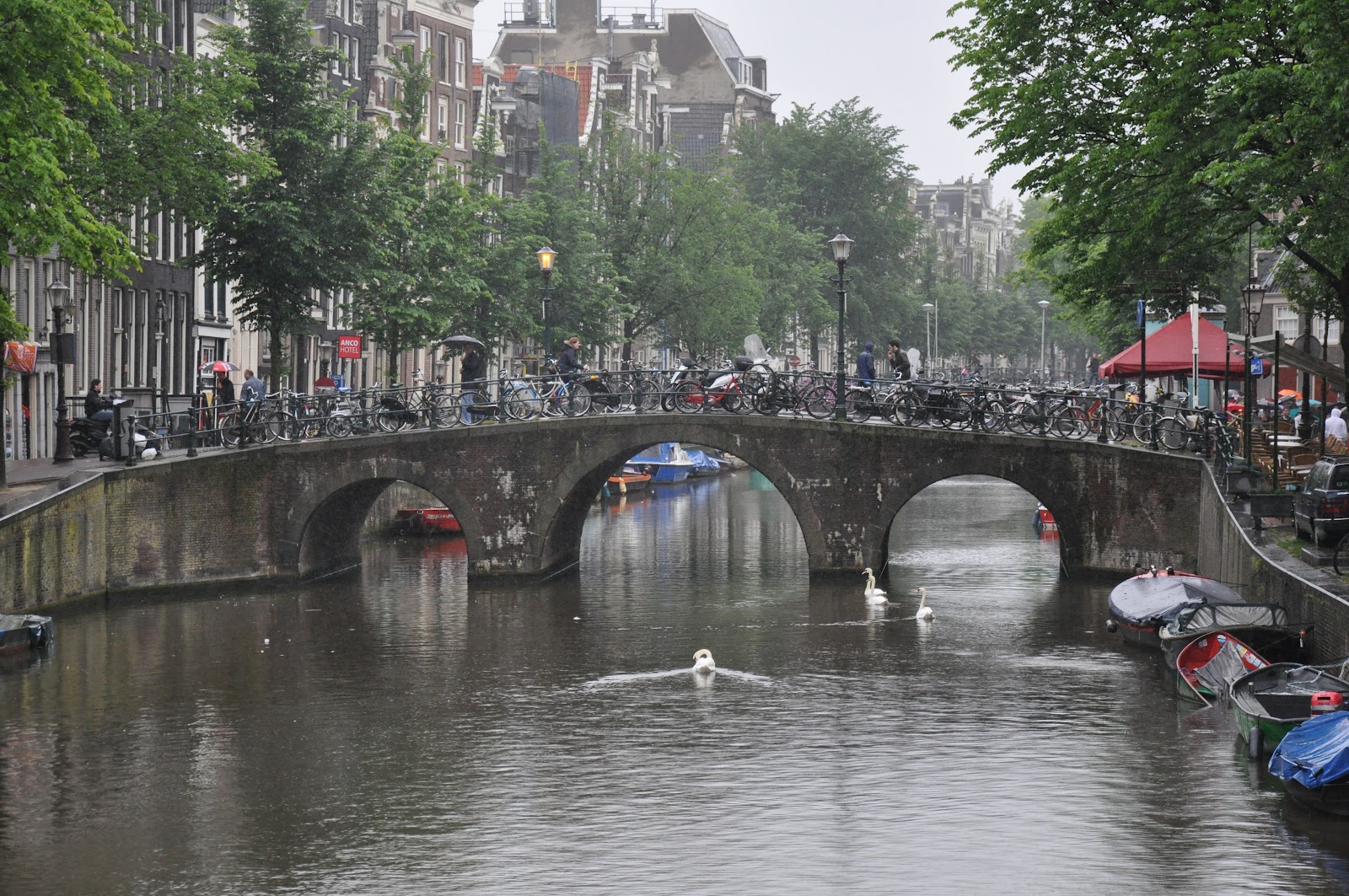
So begins the camp song that I especially liked for the chorus about Amsterdam. Being able to say "Amster- Amster- Dam Dam Dam" was my favorite part of the song, as I think it was/is for most groups between the age of 12 and 15. Now, at 23, I finally got to visit the place where these three jolly fishermen should have gone to instead of Jericho.


My friend and fellow English assistant Christine convinced me to go with her, since we'd both never gone before. I figured it would be a good chance to go somewhere outside of Germany and she knew somebody local, so it worked out well. People always talk about it like it's one of those "must-see" places, so it must be worth it, right? Right.

Apparently I'm the worst at preparing for weather this spring. I even do more checking the forecasts than I have ever done before and still get it terribly wrong. I swear the forecast was for sun and maybe a bit of light rain, so I was trying to pack as light as possible for a three-day trip. Since I thought it was going to be nice, I only brought a pair of shorts, a light sweatshirt, and enough t-shirts to get home. I even packed the sunscreen to prevent a repeat of my first disaster.

The weather was nice on Saturday when we arrived, but Sunday morning was cold and rainy. Not like a little rainy, but a legitimate full-on rainy day. Lucky me and my non-waterproof hoodie, shorts, and shoes with more holes than a salad strainer. Since the walking tour we had planned on taking on Saturday (good weather) was full, we had to postpone until Sunday (not-so-good weather). So. A three hour outdoor walking tour, for which I was already wet just by walking to the meeting point from our hostel. We broke down and bought cheap umbrellas from a souvenir shop on the corner, which was genius. I only hated myself a little bit for being from Seattle and having to buy an umbrella to make it through the day. But my feet were soaked and cold and I had a camera to keep dry.

The tour was really great though! We walked all over Amsterdam and learned lots of interesting tidbits about the city and some of the famous people who lived there. Other places we visited during the weekend included the Anne Frank House and the Historical Museum of Amsterdam.


Didn't realize I was about to jump into a puddle.

Breakfast. With ice cream.


It's made out of sand! I thought it was breathing at first.


There was a beach soccer tournament in the big square.
We got to see a few minutes of Germany vs. Holland.


A barge whose only purpose in life is to store bikes.
So awesome.


 Christine's friend took us to a really cool restaurant called Moeders, which translates to  "Mothers'," if I remember correctly. The walls are covered with pictures of people's moms, which you can bring with you and leave after you eat, and they'll put them on the wall or on the windowsills, wherever there is space. By that I mean you can leave pictures, not your mom.

Each dish and piece of cutlery is different from the rest, so everyone at your table gets a little different look for their meal. The story is that when the restaurant opened, they asked everybody to bring their own dishes. If they left them for the restaurant, they got a free meal. It's a pretty neat idea, and the place is really popular. The food is great!


More pictures of mothers at Moeders.

Statue of Anne Frank around the corner
from where she lived with her family in hiding.


Now I've only got two more weekends left and I'm on my way home! I can't believe it. But that's going to be another post. I have one more trip planned in a week and a half. Stay tuned...

Monday, June 18, 2012

Three Weekends of Travel: Part II


Rostock. 7 hours northeast of Cologne by train, just inland from the East Sea. It's an old Hanseatic City that still has chunks of the old city wall standing, and you can even walk along a part of it. There's all kinds of old historic buildings, and one of the coolest looking churches I think I've seen here. You can tell it was built by sea traders somehow, because it's huge and looks like it could be used for a trading center or something.

My train ride took me back through Bremen and into Hamburg, where I had to transfer to a regional train for the last leg up to Rostock. Apparently it's a very popular tourist destination on weekends and holidays because all the seats were full and most of the entryways were packed too. I ended up standing for 2 1/2 hours with a loud and energetic soccer team.

Wednesday, June 13, 2012

Three Weekends of Travel: Part I


When May rolled around, I suddenly realized that I had several places still on my checklist that I needed to get to, so I scraped together the rest of my paycheck for the month and bought my tickets. Three weekends in a row, covering quite a bit of the northern area of Germany and a bit west to Amsterdam.

My first trip was a twofer - two days in Hannover to catch Enercity Swinging Hannover, a jazz festival, and two days in Bremen.

The jazz festival was held in the plaza of the city hall. The stage was small, just enough to hold a big band and about chest-height to the audience. I arrived before it started, although I was a few minutes late according to the agenda posted on their website. I was only beat out for a front-row standing spot by a large group of retirees with lawn chairs who set up right at the fencing in front of the stage.
The lineup of performers was quite varied, from a ridiculously talented accordionist from New Orleans to the New York Voices, or from a British funk/R&B/acid jazz group to an actual Big Band from Hannover.

The weather reports I read had called for rain, so I packed an umbrella expecting to get a little wet. Instead, the sun was out all day. Instead of getting wet, I got burnt. But I wasn't willing to give up my prime spot near the front, and as the afternoon wore on the oldies picked up their chairs and left, so I got even closer, although people kept managing to worm their way in front of me.

I spent the evening looking for a store open on a bank holiday that sold aloe and sunscreen. But by then I was tired of standing so I didn't really feel like I was missing out on much. Plus, as a bonus, my hostel (hidden on the top two floors of a swanky-looking hotel) gave me a private double room instead of the 8-person dorm I booked. Instead of having to share a room with drunk people crashing around like blind elephants, I got a room that came with a bath towel, hand towel, and washcloth; my own personal refrigerator, and a cookie on my pillow!


Coolest band ever: Incognito, a British jazz/soul/funk group.
The horn section had choreography!

This guy is being that guy.

The open container laws in Germany make it so that people can drink on the go. Sometimes it's just interesting, like when people convert garden wagons into rolling keg carriers complete with a countertop tap. Sometimes it's entertaining, like the man in the picture above. Sometimes it's uncomfortable, like the time a guy and his girlfriend made out so intensely on the train that they fell on the floor and couldn't get up. And sometimes it's just messy. People bring cases of stuff to events like this jazz festival and leave the empties on the ground when they're finished. It's an interesting transformation, like the opposite of a wave on the beach. A wave of people wash up onto a clean concrete plaza, and when the wave retreats, what's left is broken glass, trampled plastic cups, soggy cardboard boxes, etc.

Thankfully, the city workers are very good at cleaning up quickly. And then you can walk around the city some more and you see other things that are cool.


At the Herrenhaeuser Garten, a really cool garden place.


After Hannover came Bremen, another hour north. The feel of the city is much different. It feels a lot older, more like a "real German city," if that's actually different than just a "normal German city." The market square is like a thousand years old  several hundred years old, and there are lots of things they preserved around the city that make it really interesting.

I didn't get so lucky this time with the hostel. It was actually kind of like the hostel gods were trying to even out my hosteling experience. First of all, the first sign you see for the hostel is on the opposite side of the building from where the real entrance is, so they put up a sign saying to go around the corner. Then of course, the first door you come to is actually the entrance to a private apartment building, but the people who live there were nice enough to put up a handmade sign saying "NOT THE HOSTEL." So you continue down this little side street until you chance to look up at the building and see the much smaller hostel sign above the main entrance, which looks like the back door to a house. Once inside, the receptionist is friendly and helpful, but there's no lock on the door to my 6-bed dorm, and while they say there are lockers, there are only two in the hallway for the entire floor. They're already used.

There was a large contingent of Americans in the hostel; a group of university students from somewhere in Louisiana are here for a three-week "intercultural module," in which their professor takes them to a museum or other activity during the day, and they drink all evening. As I made dinner one night I got a chance to talk with a couple of them as they pregamed the UEFA Champions League soccer match between FC Bayern München and Chelsea. They're actually pretty interesting people, and getting to talk with them made their debates about which order to drink their bottles of alcohol all the more entertaining. While I was eating, two guys finished a bottle of strawberry wine ("aww man, we were supposed to use that as dessert after the vodka!") and most of a fifth of cheap vodka ("I just love 5 Euro Russian vodka!"), which was mixed with orange juice at a roughly 1.5:1 ratio.

Luckily, I wasn't rooming with any of them. After watching an exciting, but finally disappointing soccer match (Chelsea won), I headed upstairs to sleep on my rock-hard mattress.

I was woken up around 4am by what felt like a minor earthquake. Once I was coherent, I realized that one of my roommates had arrived and was snoring. When I say snoring, I really mean something more like his lungs were trying, with some success, to consume his tongue. Every minute or so, just when you're convinced he's stopped breathing, his throat opens just enough to get a gasp of air in, and then it's like the room is a giant balloon and his lungs are the space all the air is trying to escape to. The process literally shakes the whole room. On the second night, the girl against the wall opposite me actually got up to go poke him to try to get him to shift. It didn't make any difference. I slept with half a kleenex in each ear, and my head under my pillow and a sweatshirt, which also didn't do much, seeing as half the problem was the room shaking.

The city itself is awesome though!


Statue of the Bremer Stadtmusikanten,
or the Bremen town musicians,
immortalized by the Brothers Grimm.


Part of the "Schnoorviertel," an old
fisherman's quarter where the street is
about 3 feet across.


Stone-cold gangster


Lucky I decided to leave relatively early in the afternoon. Good ol' reliable Deutsche Bahn ("always on time") pushed my train back by 40, then 45, then 90, and then 160 minutes due to technical problems. The same train service runs once an hour. But because of the backup, the next two trains were so full they were only letting people with seat reservations on. They finally re-designated another train to take the rest of us, so I got on the train about the time I was originally supposed to arrive back in Cologne.

Good times.